
Workers’ Rebellion
Why This Exists
Automated rejection emails go out to qualified people who were never seen by a human. If you’ve job-searched in the last decade, you already know exactly how that feels.
But it’s not just the resume that never gets read. It’s what happens to your body while you’re still employed and still “productive” — back-to-back meetings that could have been an email, day after day, because the culture treats stillness as commitment. In-office jobs make it worse: no standing between calls, no walking it off, just hours of sitting because someone decided that’s what dedication looks like.
We built this because we lived both sides of it.
Read our story →What We Believe
People over profit. No cherry-picking whose rights count. Anti-fascist, secular, science-based, and done pretending everything is fine.
Read the full manifesto →How the Money Works
We’re a startup. We’re honest about that. Every quarter, we publish which phase we’re in. Once we reach the later phases, we intend to publish the numbers behind them every quarter as well.
Where Things Stand
💻 Job Search Tracker
Built, tested, and in the store.
Get it in the shop → · See It In Action →🔭 Future Plans
We’ll share them when we reach the right phase.
See It In Action
The Job Search Tracker — active tracker, archive, and a full analytics dashboard, all reading from the same data in your browser. The screens below are populated with fictional sample data so you can see what it looks like once you’ve been using it for a while:
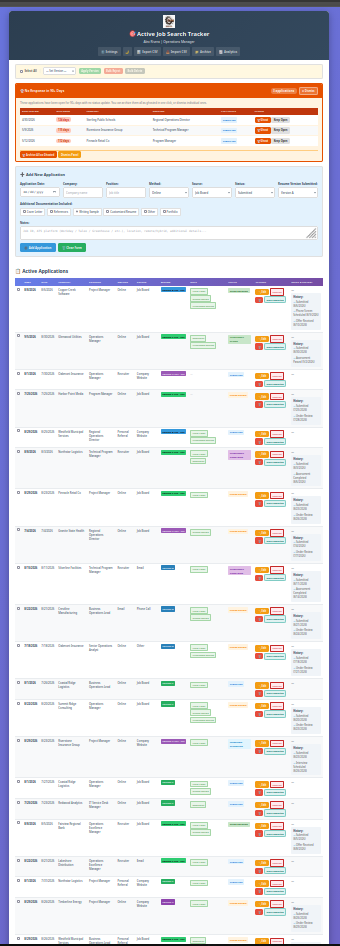
Your Working List — every application you submit, with status, interview rounds, and notes tracked in one table. This is the page you live in day to day.
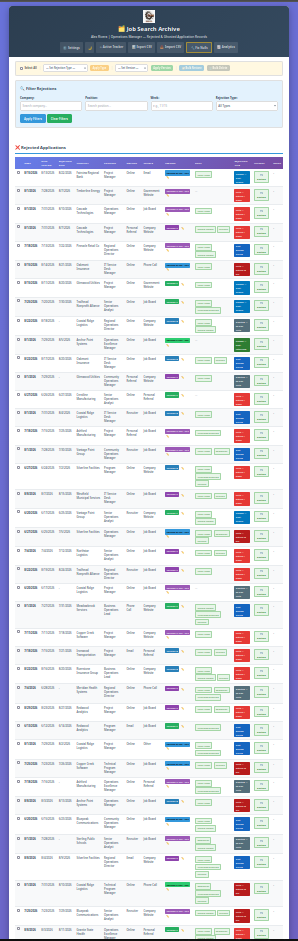
Where Outcomes Go — when you record a rejection, the tracker asks when it arrived and whether a person spoke with you, files it by timing, and moves it to the archive. Nothing to re-enter.
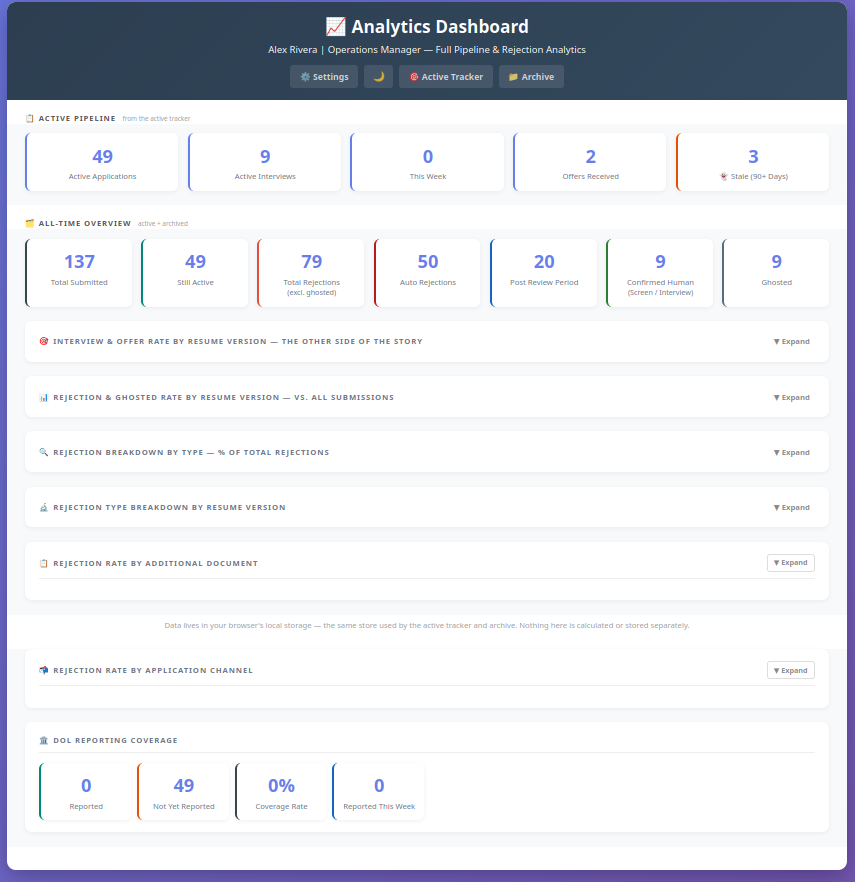
The Full Picture, At a Glance — a dedicated analytics dashboard pulling from both the tracker and the archive. Nothing to export to a spreadsheet first.
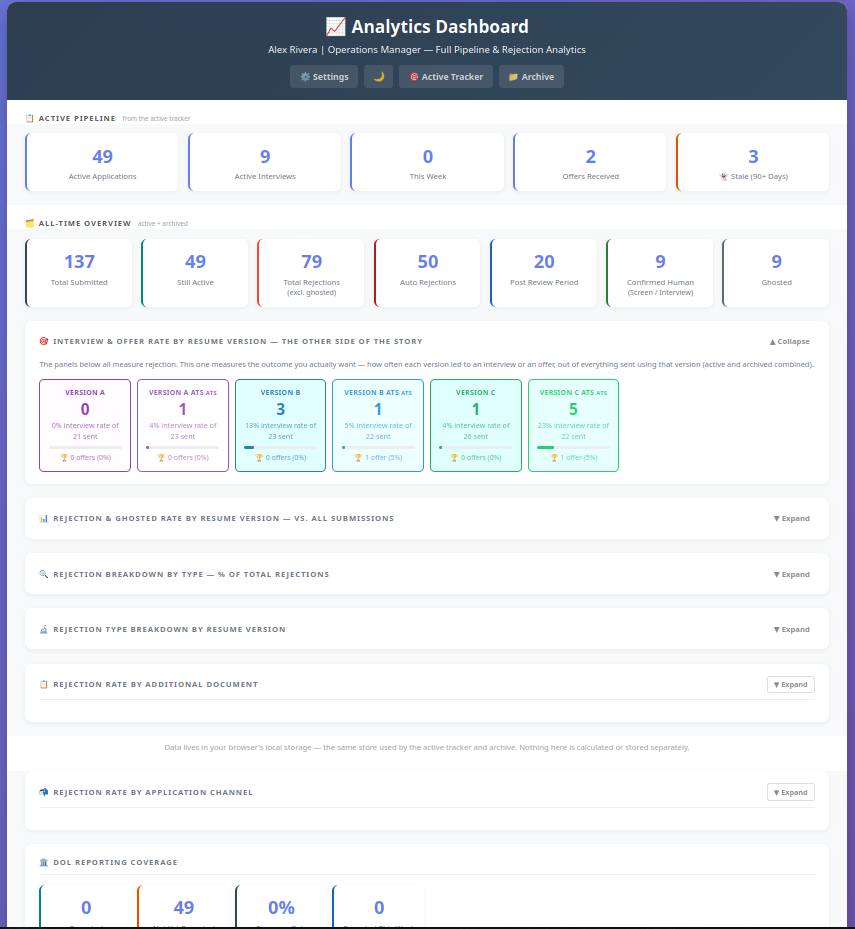
Interviews and Offers — most trackers only count how many you sent. This shows how many led to interviews and offers, by resume version.
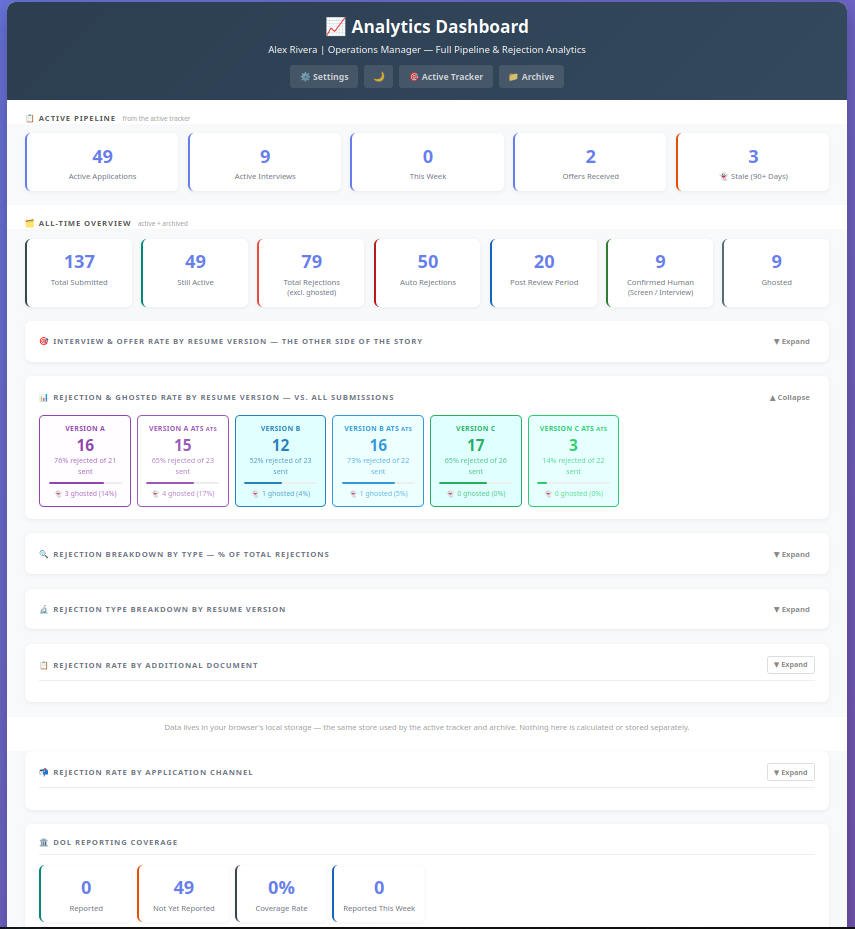
How Each Version Compares — explicit rejections, no-response records, and still-active applications for every resume version you configure, with the counts behind each percentage.
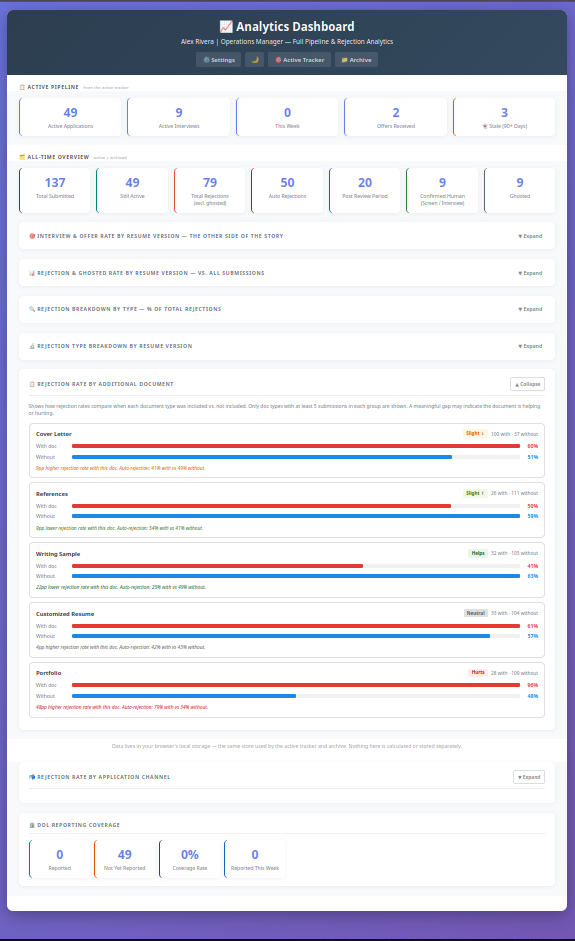
Do Extra Documents Go With Better Outcomes? — attach a cover letter, a writing sample, a portfolio, anything — and compare the rate with and without it. It shows correlation, not cause.
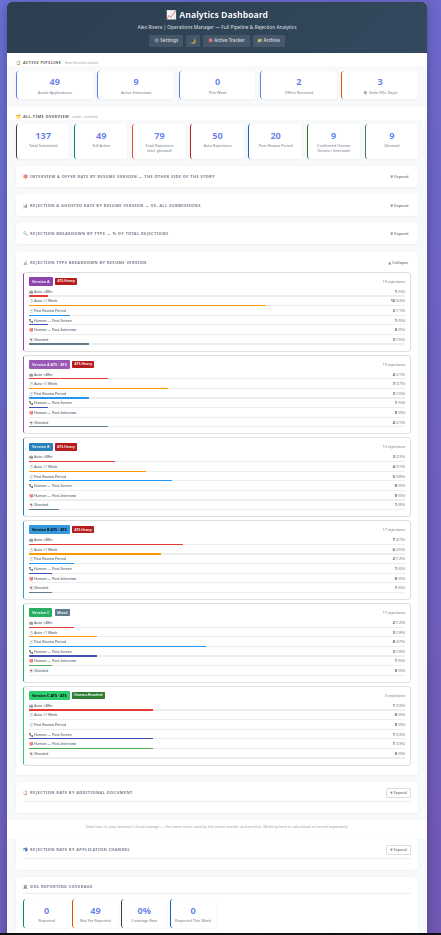
What Kind of Answer? — early rejections, later rejections, answers after a recruiter screen or interview, no response, and mutual-agreement outcomes, per resume version, not just overall.
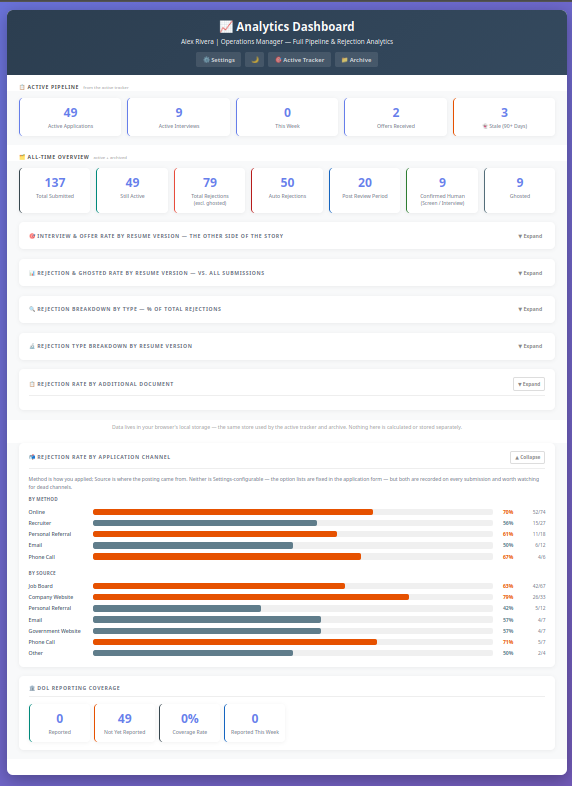
Where You’re Applying — outcomes by method and by source (rejected, no response, mutual agreement, and still active), so you can compare channels with the numbers in front of you.